
Are you tired of that nagging back pain holding you back every day? You’re not alone.
Back pain can sneak up on you, making simple tasks feel like a struggle. But what exactly causes this discomfort, and more importantly, how can you find relief? Understanding the root causes of your back pain is the first step toward lasting comfort.
You’ll discover the common triggers behind your pain and effective treatments that can help you get back to feeling your best. Keep reading—your back will thank you.
Common Causes Of Back Pain
Back pain is a common problem affecting many people worldwide. It can happen for many reasons. Understanding these causes helps in managing and treating back pain effectively. Below are some frequent causes of back pain.
Muscle Strain And Sprain
Muscle strain occurs when muscles stretch too far or tear. Sprains involve overstretched or torn ligaments. These happen due to lifting heavy objects or sudden movements. Poor body mechanics during activities can also cause strain and sprain.
Herniated Discs
Discs act as cushions between spine bones. Herniated discs happen when the soft center pushes out through a tear. This can press nerves and cause pain. Lifting heavy things or aging can lead to disc herniation.
Poor Posture
Sitting or standing incorrectly puts stress on the back. Slouching or leaning forward causes muscle tension. Over time, bad posture can lead to chronic back pain. Good posture helps reduce this risk.
Arthritis And Degeneration
Arthritis causes inflammation in joints, including the spine. Degeneration means wearing down of spinal structures with age. Both conditions reduce flexibility and cause pain. They often worsen with time.
Injuries And Accidents
Falls, car crashes, and sports injuries can damage the back. Fractures, bruises, or nerve injuries cause severe pain. Immediate care is crucial to prevent long-term problems.
Lifestyle Factors
Being overweight adds pressure to the back. Lack of exercise weakens muscles supporting the spine. Smoking reduces blood flow, slowing healing. Stress can also increase muscle tension and pain.

Credit: www.physicaltherapistsnyc.com
Symptoms To Watch For
Back pain can show up in many ways. Some signs are mild and brief. Others are strong and last longer. Knowing what symptoms to watch for helps you act fast. It guides you to the right care and avoids more damage.
Chronic Vs Acute Pain
Acute pain happens suddenly. It lasts a few days or weeks. Often, it comes from injury or strain. Chronic pain stays for months or more. It may signal ongoing issues like arthritis or nerve damage. Tracking how long pain lasts is key.
Radiating Pain And Numbness
Pain that spreads from the back to legs or arms needs attention. It may come with numbness or tingling. These signs can mean nerve problems. Sciatica is a common cause. Nerve pain requires specific treatment to heal properly.
Limited Mobility
Back pain can make moving hard. Difficulty bending, twisting, or standing is a warning sign. Limited mobility affects daily tasks. Ignoring this can lead to muscle weakness and stiffness. Early care helps keep you active and pain-free.
When To Seek Medical Help
Seek help if pain is severe or lasts over a few weeks. Sudden weakness, numbness, or loss of bladder control needs urgent care. Also, visit a doctor if pain follows an accident. Early diagnosis improves treatment success.
Home Remedies And Lifestyle Changes
Back pain can limit daily activities and affect your mood. Home remedies and lifestyle changes help ease pain and improve comfort. These natural approaches support healing without strong medicines. Small changes in habits bring big relief over time.
Exercise And Stretching
Gentle exercise keeps muscles strong and flexible. Stretching reduces stiffness and improves movement. Walking, swimming, and yoga are good options. Avoid sudden or hard movements that cause pain. Regular activity helps prevent future back problems.
Ergonomic Adjustments
Proper posture reduces strain on your back. Use chairs with good support for your lower back. Adjust your computer screen to eye level. Keep feet flat on the floor when sitting. Ergonomic changes at work and home protect your spine.
Heat And Cold Therapy
Heat relaxes tight muscles and improves blood flow. Use a warm towel or heating pad for 15-20 minutes. Cold therapy reduces swelling and numbs pain. Apply ice packs wrapped in cloth for short periods. Alternate heat and cold for best results.
Weight Management
Excess weight puts pressure on the spine. Losing weight lowers back stress and reduces pain. Eat balanced meals with fruits, vegetables, and lean proteins. Drink plenty of water and limit sugary foods. Healthy weight supports long-term back health.
Stress Reduction Techniques
Stress can cause muscle tension and worsen pain. Practice deep breathing or meditation daily. Try light activities like walking or gardening. Sleep well to allow your body to heal. Managing stress helps your back feel better naturally.

Credit: orthosportsmed.com
Medical Treatments For Back Pain
Medical treatments for back pain help reduce discomfort and improve movement. Many options exist depending on pain cause and severity. Doctors often start with less invasive methods and move to stronger treatments if needed.
Physical Therapy
Physical therapy uses exercises to strengthen back muscles. Therapists guide patients through stretches and movements. These actions improve flexibility and reduce pain over time. Therapy also teaches proper posture to avoid future pain.
Medications And Injections
Medications help control pain and inflammation. Common options include pain relievers, muscle relaxants, and anti-inflammatory drugs. Injections like corticosteroids target specific painful areas. These injections reduce swelling and provide temporary relief.
Surgical Options
Surgery may be necessary for severe back problems. Procedures aim to fix structural issues like herniated discs or spinal stenosis. Surgery can relieve pressure on nerves and improve function. Doctors consider surgery only after other treatments fail.
Alternative Therapies
Alternative therapies support traditional treatments. Methods include acupuncture, chiropractic care, and massage. These therapies help reduce muscle tension and improve blood flow. Many patients find relief and better comfort with these options.
Preventing Future Back Pain
Preventing future back pain requires daily care and good habits. Small changes can protect your back from strain and injury. Focus on exercises, movements, and posture that keep your spine healthy. Consistency helps build strength and reduce pain risks. Follow these simple steps to support your back every day.
Strengthening Core Muscles
Strong core muscles support your spine and reduce pressure on your back. Core exercises improve balance and stability. Try planks, bridges, and gentle abdominal workouts. Building core strength helps your back handle daily activities better. Aim for regular, easy workouts to keep these muscles active and healthy.
Proper Lifting Techniques
Use your legs, not your back, to lift heavy objects. Bend your knees and keep the object close to your body. Avoid twisting while lifting or carrying. These actions protect your spine from sudden strain. Practice lifting safely every time to avoid injury and pain.
Maintaining Good Posture
Good posture keeps your spine aligned and reduces muscle tension. Sit and stand tall with your shoulders relaxed. Use chairs that support your lower back. Avoid slouching or leaning forward for long periods. Good posture feels natural and helps prevent back problems.
Regular Physical Activity
Moving your body regularly keeps your back flexible and strong. Walking, swimming, and stretching are gentle ways to stay active. Avoid sitting for too long without breaks. Regular activity improves blood flow and speeds healing. Make daily movement a habit to support your back health.
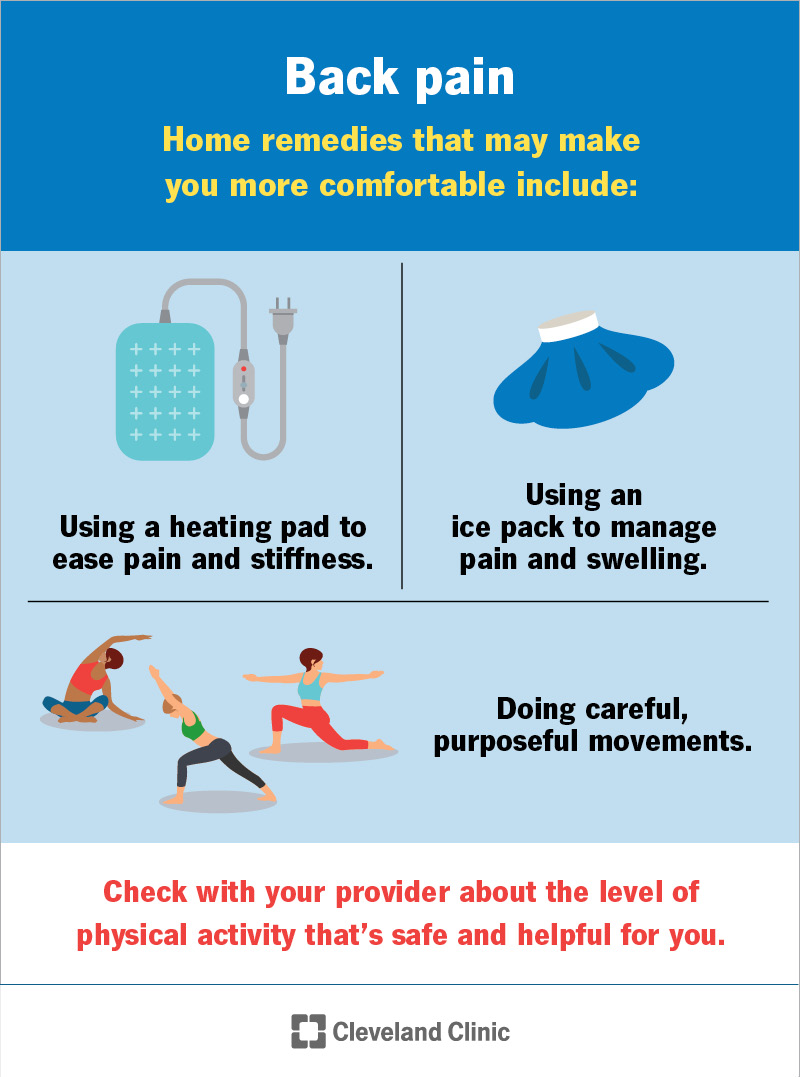
Credit: my.clevelandclinic.org
Frequently Asked Questions
What Are The Common Causes Of Back Pain?
Back pain commonly arises from muscle strain, poor posture, herniated discs, arthritis, or injury. Lifestyle factors like inactivity and heavy lifting also contribute. Identifying the cause helps tailor effective treatments and prevent future pain episodes.
How Can I Treat Back Pain At Home?
Home treatment includes rest, gentle stretching, ice or heat packs, and over-the-counter pain relievers. Maintaining good posture and light exercise can speed recovery. If pain persists beyond two weeks, consult a healthcare professional for further evaluation.
When Should I See A Doctor For Back Pain?
See a doctor if pain is severe, lasts more than two weeks, or causes numbness. Also seek help if pain follows an injury, or if you have weakness, fever, or unexplained weight loss. Early diagnosis prevents complications.
Can Exercise Help Reduce Back Pain?
Yes, regular exercise strengthens back muscles and improves flexibility. Low-impact activities like walking, swimming, or yoga are beneficial. Always start slowly and avoid movements that worsen pain. Consult a professional before starting new exercises.
Conclusion
Back pain can come from many different causes. Knowing the cause helps find the right treatment. Simple steps like stretching and good posture often ease pain. Sometimes, medical help is needed for relief. Staying active and avoiding heavy lifting protects your back.
Taking care of your back improves daily life. Listen to your body and act early. Healthy habits keep back pain from coming back. Small changes make a big difference over time.